Studio · Apr 25, 2026
The mug handle problem
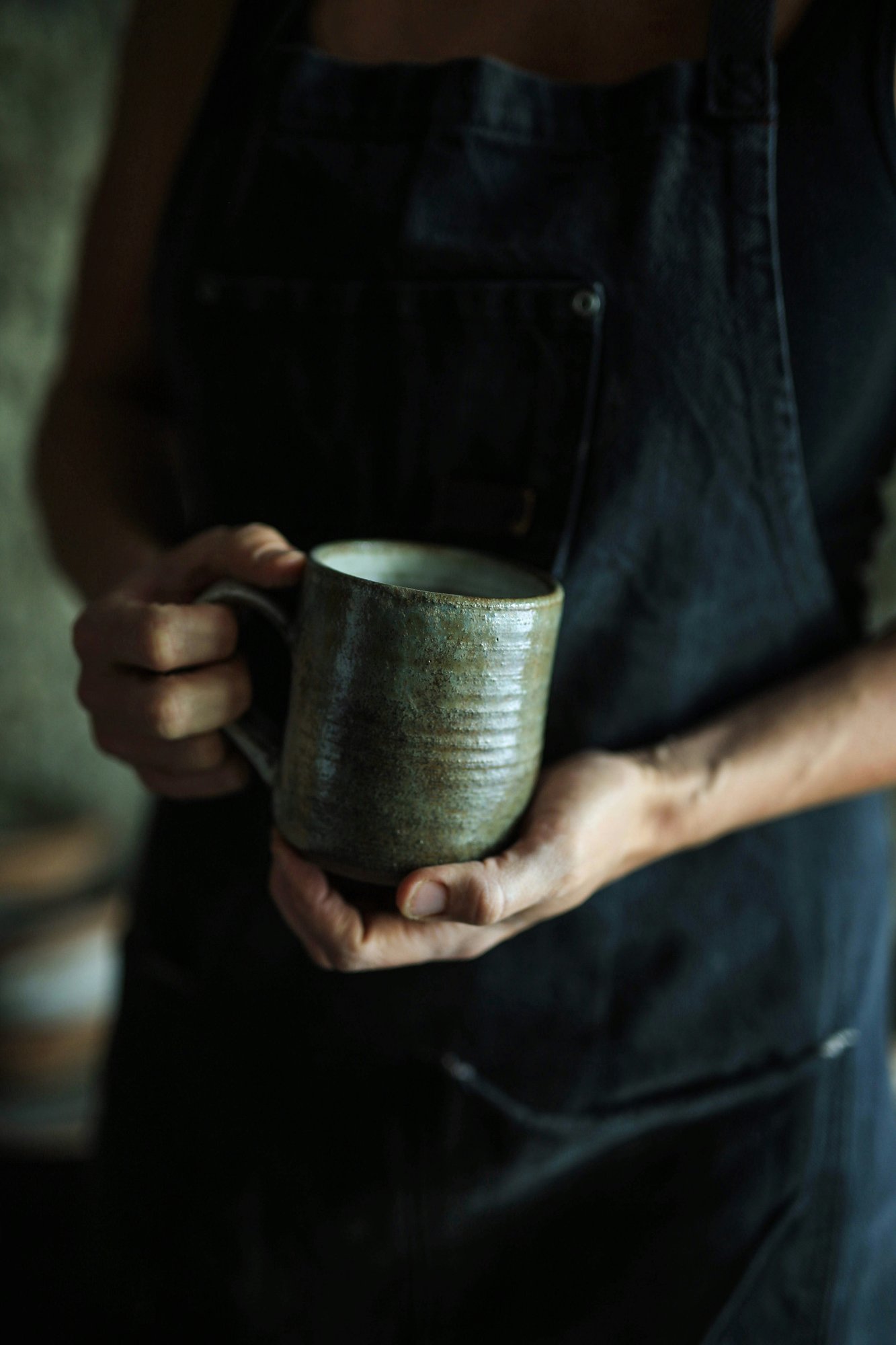
If a mug is going to fail in our studio, it is usually at the handle, and usually before it ever sees the kiln. Handles look like the easy part. They are not.
We pull every handle by hand from a carrot of clay, wetting and stretching it until it tapers the way we want. Then it rests until it firms up a bit. The mug body sits under plastic at the same time, trimmed and waiting at leather-hard.
Attaching is where timing matters. Both pieces need to be close to the same dryness. We score the joints, add slip, press the handle on and blend the clay across the seam so there is no line left to open up.
Then comes the slow part. A thin handle dries faster than a thick mug wall, and clay shrinks as it dries. If the handle shrinks first, it pulls away and cracks at the joint. So finished mugs dry under loose plastic for two or three days, then uncovered, so the whole piece loses water at close to the same rate.
The last test is comfort. The Dune mug handle fits three fingers with your thumb resting on top, and it sits low enough that a full 12 ounces balances in your hand. If a handle from a run feels wrong, it goes to the seconds shelf, even if nothing is cracked.