Studio · Jan 14, 2026
Why cone 6, not cone 10
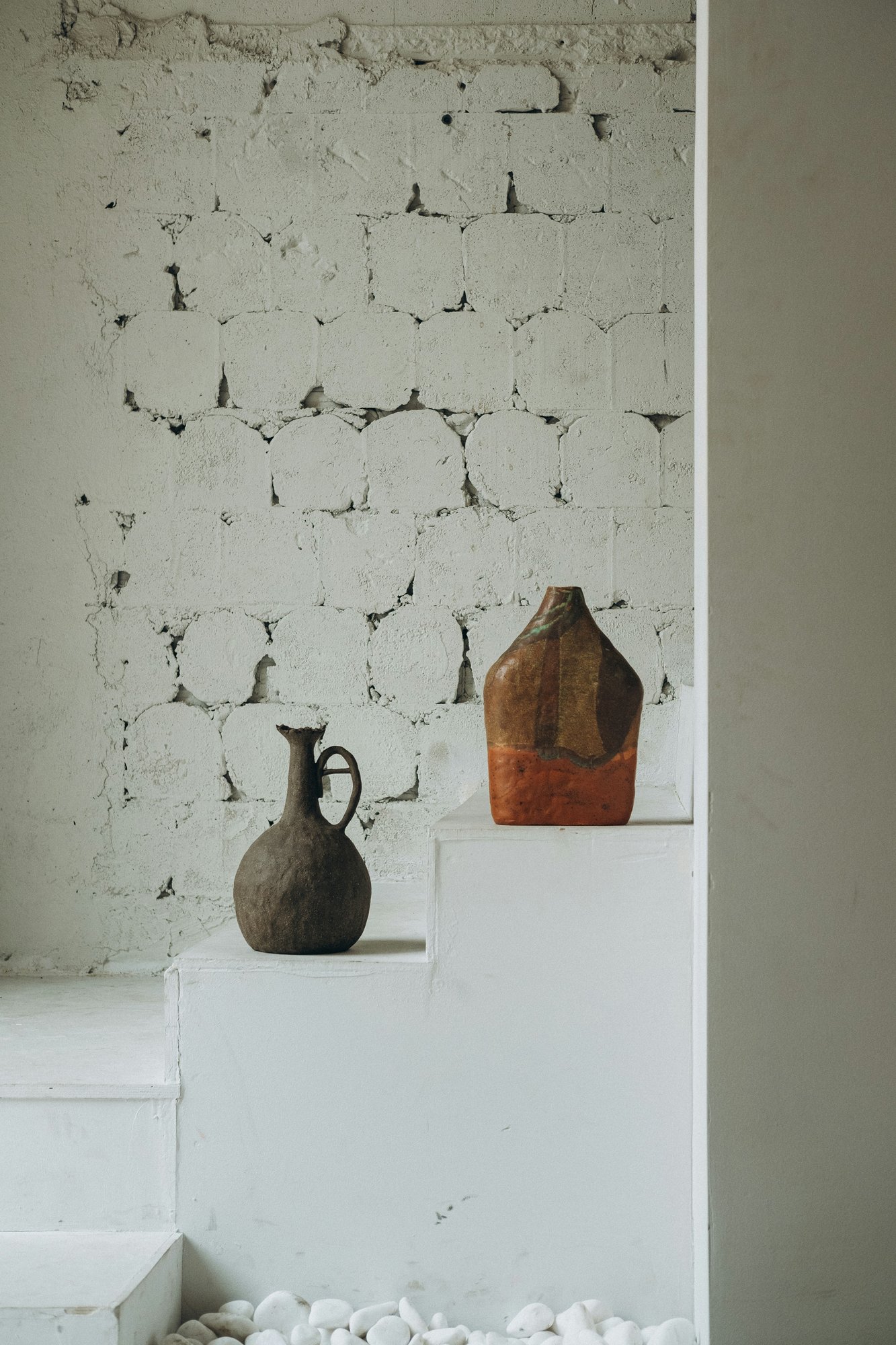
Potters talk about cone 10 the way cooks talk about wood-fired ovens. It is the classic high-fire stoneware range, around 2,345°F, and it produces some beautiful glazes. We fire to cone 6 instead, around 2,232°F, and we'd make the same call again.
The first reason is the kiln. It is the one June built with her father, and every hundred degrees at the top of a firing costs a lot of fuel and a lot of wear on the burners, bricks and shelves. Cone 6 means shorter firings, a kiln that lasts longer, and a gas bill a small studio can carry.
The second reason is that cone 6 clays and glazes have caught up. Our stoneware body is formulated to vitrify at cone 6, so it comes out dense, strong and nearly non-absorbent. The glazes are designed to melt fully at that temperature, which is what makes them durable and food-safe.
What do we give up? Some of the deep reduction effects that are easiest at cone 10: certain celadons, shinos, the heavy iron reds. We still fire in reduction, so the clay's iron speckles and our fog white still break warm at the edges. We just get there with more testing instead of more heat.
For you, the difference is invisible at the table. A cone 6 mug holds heat, survives the dishwasher and rings when you tap it. That's the job.